
The Konrads were David Bowie’s first band—formed in 1962, when he was just 15 and still going by his birth name, **David Jones**. The group came together in **Bromley**, South East London, where Bowie was attending **Bromley Technical High School**, studying art, music, and design - wikipedia 
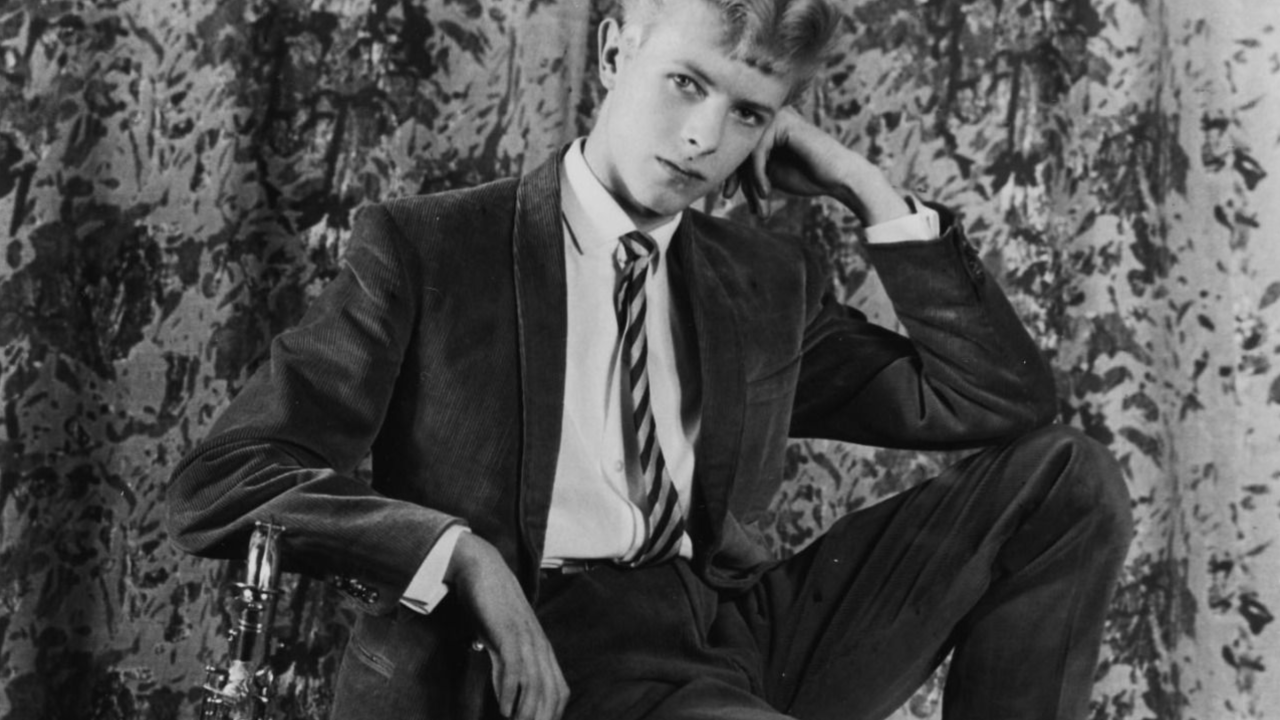
David Bowie with The Konrads, circa 1963. Used under fair use for commentary. Source: - consequence.net
Bowie joined initially as a **saxophone player**, not as a singer. He was already obsessed with image, rhythm, and performance, but hadn’t yet stepped into the spotlight. The group played local gigs—youth clubs, weddings, community halls—performing covers of early rock ’n’ roll and skiffle standards.
# The Scene in 1962 It was an interesting moment. Britain was in a musical transition. The late-’50s skiffle boom was fading, and American rock 'n' roll had hit hard. Elvis Presley was still iconic. Chuck Berry, Little Richard, Buddy Holly—they were touchstones for a new generation of working-class British teenagers forming bands in garages and garden sheds.
In 1962: - **The Beatles** were still a local Liverpool act, not yet world-famous. They’d just been signed to EMI and were recording “Love Me Do.” - **Cliff Richard and The Shadows** were the UK's reigning stars—clean-cut, guitar-driven pop for parents and teens alike. - **The charts** were full of crooners (like Pat Boone), instrumentals, novelty singles, and American imports.
On the **British charts in 1962**, you’d find: - **Elvis Presley** – “Good Luck Charm” - **Ray Charles** – “I Can’t Stop Loving You” - **The Tornados** – “Telstar” (the first UK song to hit #1 in the US) - **Cliff Richard** – “The Young Ones” - **Frank Ifield** – “I Remember You”
But bubbling beneath the charts was a new raw sound—**beat music**, **R&B**, **mod** culture. Bowie would soon move toward that.
# Who Was in the Band
The Konrads weren’t professionals. They were local kids trying to copy what they heard on the radio and in dance halls. The band’s lineup shifted, but some core members included: - **George Underwood** – rhythm guitar (and later, the artist who would design Bowie’s early album covers) - **Neville Wills** – drummer - **Alan Dodds** – guitar - **David Jones (Bowie)** – saxophone, later vocals.
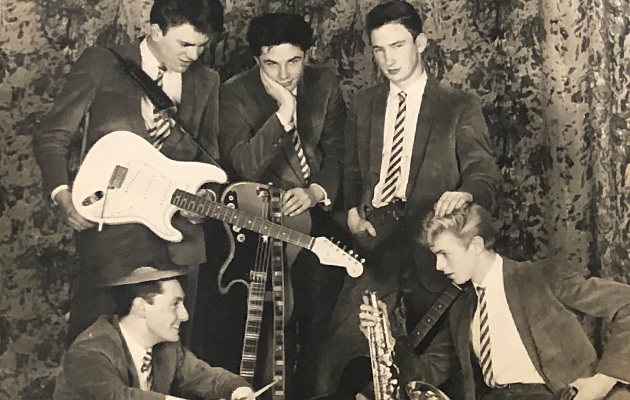
Photo: The Konrads, c.1963. © London Features / Kentish Times Archive. Source via London Features archive - recordmecca.com and uncut.co.uk
George Underwood is especially notable—he’s the one who gave Bowie his famous mismatched eyes, following a teenage punch-up over a girl. They remained lifelong friends.
# Bowie’s Influences At 15, Bowie was absorbing everything. His early influences included: - **Little Richard** – He once said: > "If it hadn’t been for **Little Richard**, I wouldn’t have gotten into music." - **Elvis Presley** – He adored the look, the swagger, the performance - **Fats Domino**, **Ray Charles**, **James Brown** - British R&B bands emerging from London and Liverpool—he listened to pirate radio and imported records
Bowie wanted music that **moved**. He wanted style, theatre, shock, and sound. Even in The Konrads, his ambition was growing. While they were content to play weddings, he was already dreaming of outer space.
# Recordings There’s only **one known demo recording** from The Konrads, long lost and rediscovered decades later in an attic. It features Bowie singing **“I Never Dreamed”**, a track he co-wrote with the band. He’s about 16 on the tape. The demo was auctioned in 2018.
YOUTUBE hg7YwHa5Zas Bowie’s first ever studio recordings.
It’s rough, amateur, and heartfelt. And you can already hear him trying to sound like **Elvis + doo-wop + something strange**.
# Legacy
The Konrads didn’t last long. Bowie soon left, looking for something more daring. His next musical steps were with **The King Bees**, **The Mannish Boys**, and then **The Lower Third**, as he experimented with names, sounds, and stage personas.
But The Konrads were the first swing of the hinge. A suburban schoolboy with a saxophone, listening to **Little Richard** in his bedroom, forming a band not to impress the charts—but to escape gravity.
# See
- Studio-recording - theguardian
- London - bbc.co.uk